By Deborah Douglas
"Another Night in Nashville"
Jan 19, 2007: The Station Inn (The Skylighters, and Peter Cooper)
Two rows and the parking lot is already full and a pickup truck is offloading at the stage door. It is an hour and a half before show time, isn't it? Anxiety begins to gnaw, but the Station Inn often has unannounced showcases at 6, this must be one. After a few futile attempts at street parking, wherein I back up, maneuver, peer at signs, and generally look like the fool to a lone pedestrian observer in stocking cap and inscrutable beard, I elect the free valet parking across the street, clearly labeled with the names of prestigious nearby restaurants.
Who's in charge behind the valet desk? How about the least busy? She tries to dodge but I inform her that I'm eating at one of "these," but want to check out the Station Inn for the show time later. She nods, but clearly has never heard an explanation before!
After clearly establishing myself as an eccentric I stride on and query the woman smoking outside the Inn. It's not another show, she assures me, I should go in and take a seat as Peter Cooper 's showcase starts soon, at 8:00, not 9:00. Bad news. The pizza here is crisp, thin, and nigh unpalatable and the beer is defiantly mass market American, but the music is always a feast: world class, mountain river and mudslides melodious, wind-in-the-pines whining, Western wildfire, and Stone Mountain granite-in-the-veins American Bluegrass.
Peter Cooper I've seen before, a pleasant, earnest, up-and-coming singer-songwriter with a solo guitar. He also does a fine job as music critic at the mainstream newspaper. In Nashville that's acceptable. But I'm here for the headliners.
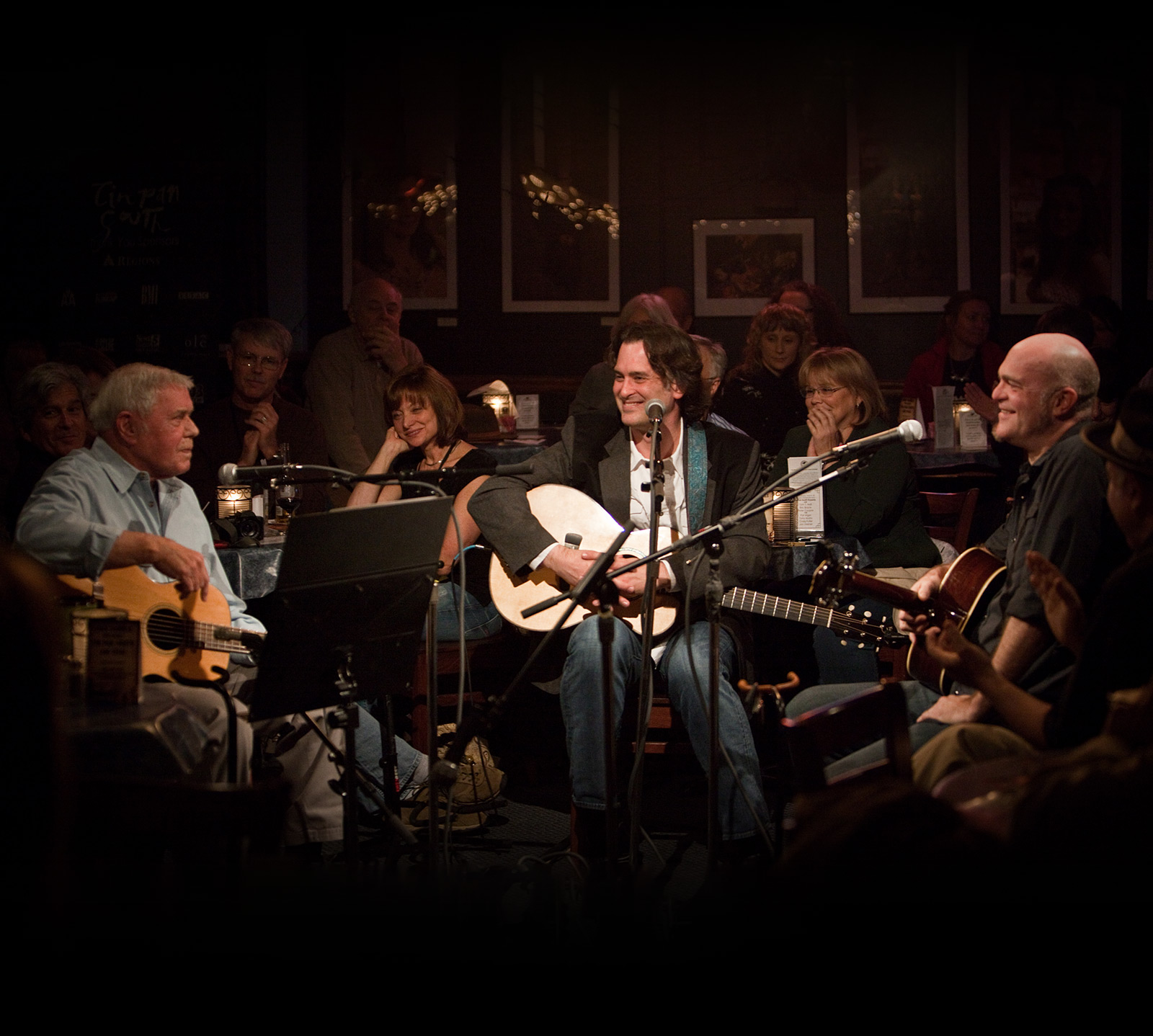
The double-barrel shot of ownership right at the door, Ann and J.T., seem very excited. I pay my money and in I go. Got the seating advantage tonight of being alone and pursue it to a single empty folding chair amidst the full ones. I've got a great view of the stage, all of the instrument necks, with the bonus of being in front of the pedal steel - about three seats back. Folks are seated at long tables, church supper style, with the stage to our side. It's abuzz, agog, ahummin' tonight! I confirm the warm-up band will be on at 9:00 after all, greet the loving couple next to me, leave my coat, and head for sushi across the street.
On my way to the door, studio steel player Pete Finney, just back from the Dixie Chicks tour, tells me that every steel player in town is here. "Lloyd Green will be playing with Peter and he produced his record. He hasn't been seen in a club for at least twenty years!" I ask Pete if he's playing with his friend Eric Brace later tonight. "No, Mike Auldridge is." Oh yeah, that's one reason I put that on my calendar. The other one is Eric Brace, whose band, Last Train Home, I much admire, has put this band, The Skylighters, together. It's gonna' be a great night in Music City!
Satisfied at Ru San's, where the service at the bar was fast and being alone meant beating out the waiting mob, I'm on my way back to the Station Inn. It stands alone too; a small, aging, one-story structure surrounded by trendy giants. I see the huge, star-blocking sign picturing another building about to rise on the other side. Good thing music plays at night and jackhammers play in the day. Still the Nashville skyline's distinctive "bat building" illumines a night in a small, country town. The Inn's incongruous concrete handicap ramp sets me wondering: Is it indicative of the age of Bluegrass fans? Not tonight.
My reader's mind takes in the capacity limit on a sign by the door: 124. There must be at least twice that inside. It is truly the most crowded I've ever seen the Inn. Thankful for my primo seat, I settle in, speaking to the strangers and nodding to familiar faces. The band has yet to sound a note so I read the local music Scene and note tonight's show is featured. Lloyd Green, it says, played with the Byrds on Sweethearts of the Rodeo. Check the bio on his website - this veteran of 10,000 recordings from the 1950s-1990s is on a blazing comeback trail.
Whaddayaknow, he's that familiar face with the gentle demeanor who nodded earlier. A full band takes the stage; the first song's vocals don't impress me much, but the lyrics are interesting and the steel prominent. Cooper refers to his throat momentarily, saying he interviewed Kim Carnes today and she kindly gave him advice for care of the throat! An audience familiar with her distinctive growling, expressive voice, the opposite of a Faith Hill's, laughs at his understated irony.
As the show progresses Cooper's voice warms up and he begins to take on different demeanors and voices of his characters as he sings their stories. It's clear that music is his life, his influences. Song after song deals with metaphors or clear references to Country music.
"Charlie Rich sings," while we picture the scenes in "All The Way To Heaven." Is Green really throwing in sound effects of whizzing bullets? Hell, yeah! The sound tonight is crystal clear, every note. Cooper moves to a song in the classical Country tradition, "Wine," but the last line rephrase an old Rock classic "Bottle of Wine."
Enjoying the lyrical poetry of these story songs, the audience is riveted and happy. So am I! Much like Todd Snider, whom he also co-writes with, Cooper often does a story as an introduction - and they're good ones! In this one he gives us a quick reprise of the theory of predestination and how that works in a football and drinking subculture in a small Minnesota town. "Sheboygan" is short and funny.
"715 (Hank Aaron)" takes me back to the Braves fever that gripped us all in Georgia when the team was riding high to the World Series, before and beyond. We were so proud of Aaron at that time. But Cooper's song not only reveals the man through pictures, but the times around him, when Aaron broke Babe Ruth's record of 715 home runs. The song not only has a sing-along chorus and true tale, but Cooper, in the best Folk tradition, tells more of the story, faster, by talking Blues in the middle of the story song. From that rap I realize Cooper was a few years younger than I, a teen when Aaron was out winning games. He was a child with his granny in a beauty shop in Atlanta, maybe the same one my granny took me to, full of the smells of permanent solutions, when Cooper encountered a dark and ugly, jealous world view that denigrated Aaron. " The more truth and beauty he put out into the world/The more ugliness came back to him/Maybe that's the way it works sometimes..." chanted the song.
But that Hank Aaron, "He took it all in stride/Stridin' to the ball/Turn of the wrist, crack!/Jog and touch 'em all."
A find in a used record bin results in Take Care. Cooper tells of encounters with Townes Van Zandt, the man and the music: "hot on the trail of a cautionary tale/A stumbling scarecrow waving on the pale/Blew it all for the sake of the song/The song goes on, but the man didn't last long ."
Later, a song recreates an encounter between Dylan and Phil Ochs. It's then I realize that Cooper is a researcher, a reader, a journalist; the word "Dylan" was threw out as an epithet. He's a story searcher, a star singer, a balladeer, a town crier, a historian in the grand poetic tradition of chanted verse. "Thin Wild Mercury" is a grand song about one moment and a famous beginning. You've gotta hear it.
At times you could hear some talk, inevitable and acceptable in the crowded room. It had a warm tone, as musicians exchanged news that could help them play again and still feed families. Cooper had a few guests on, a background and featured singer from South Carolina and the versatile keyboard-accordion player from Last Train Home, Jen Gunderman.
But the tall brunette with startling blue eyes filled the stage with his word like a revival preacher and the magic steel wove under and rang between like John Henry's hammer driven by pumping pedals and metal claws and a floating, gliding bar; underneath the bass ran and Pat MacInerny's percussion kept time for the hammer. What would Phil Ochs have said about drums on the Bluegrass stage? Bet Cooper would know.
After 12 songs Cooper told us he's looking for a label home for the CD - it has the set's songs and I hope it's available for you soon.
Look up - time for the Skylighters! Eric Brace told of watching Mike Auldridge and Jimmy Gaudreau as a teen in Washington; fate or Lady Luck? No details available, but here were more legends and Brace was fronting them.
Since Brace is a strong writer himself, I was surprised when most songs were Bluegrass standards. Well done by masters. The band did give Brace a nod with his "See What Love Can Do" and featured Auldridge's "Carolina Palms."
The faint blush on Mike Auldridge's pale cheeks that arose at applause contrasted beautifully with the flashy, toothy smile of Gaudreau as he would switch from his gleaming dark wooden mandolin to the lighter tone and golden wood of the mandola - in mid-song. Auldridge played both "The Beard Mike Auldridge Resophonic Guitar" and a pedal steel.
Gaudreau was downright funny in his knowing innocence. As he fiddled time after time with various strings and the band pattered to cover, he turned and told us, "I played for nine years with the Tony Rice Unit and Tony won't allow tuners. We had to tune by ear. So I don't know how to use one!" This was appropriately followed by a plaintive "Are You Wasting My Time"! No one seemed to notice the irony, for he tuned fast and sweet and Brace kept us entertained meanwhile.
Eric Brace carefully referred to writers with each song, a wonderful trait of Nashville musicians and fans. So I was surprised to learn that Norman Blake wrote the beautiful and popular "Last Train to Poor Valley." The Louvin Brothers were cited so much that now I'm looking for a compilation that Brace referred to. Maybe Livin', Lovin', Losin'? Tonight the band plays the beautiful "I Wish You Knew."
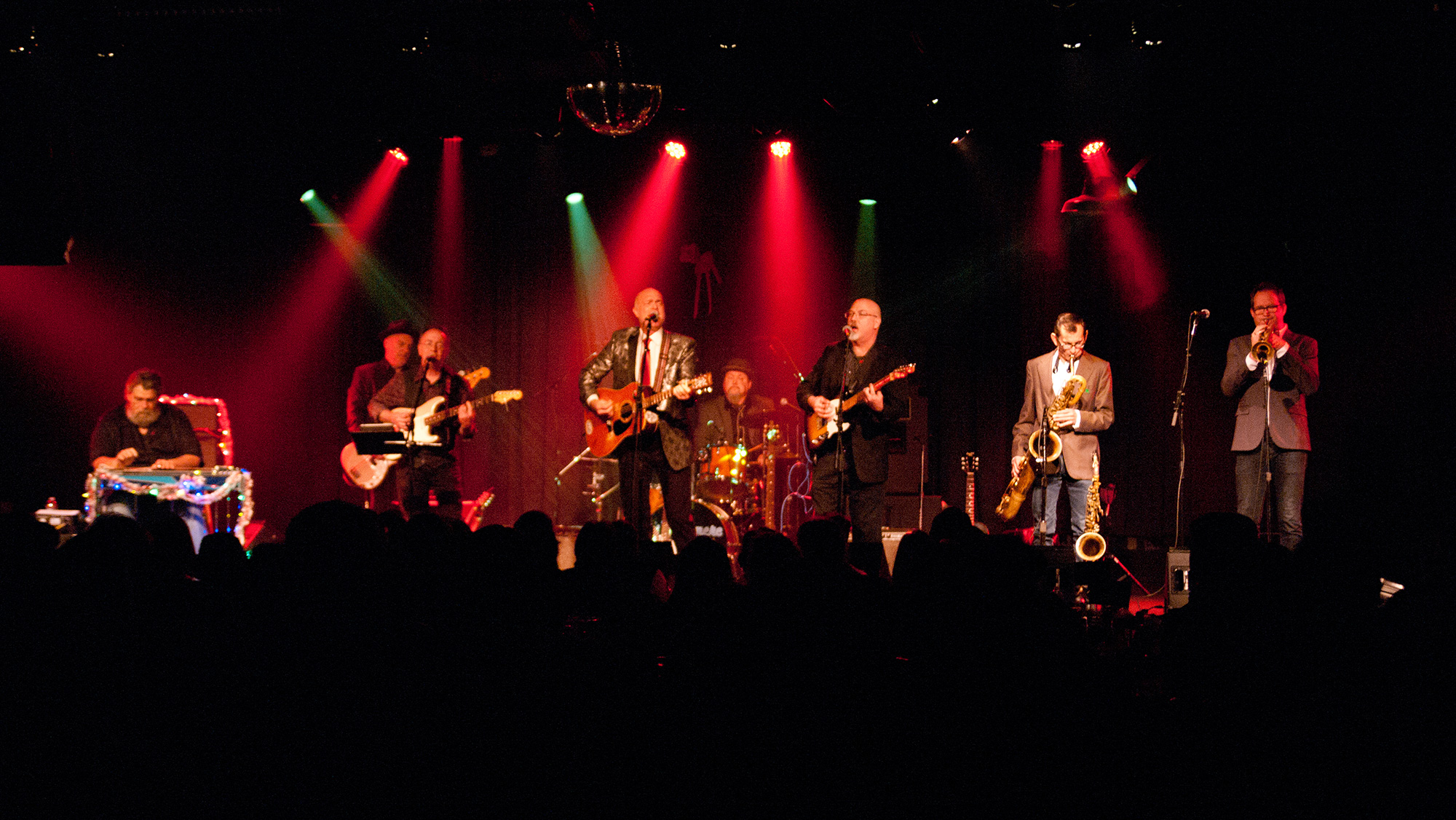
The two leads of mandolin and steel perfectly complemented, probably from long years of practice together, Auldridge and Gaudreau smiling in appreciation of each others' talents. This was a musical treat as somehow they never stepped on each other and yet both shone. Brace provided steady Bluegrass rhythm guitar and bass player Carson Gray and percussion/drummer Martin Lynds kept the beat.
Brace also provided lead vocals, strong and tender as needed, with Gaudreau singing tenor harmony at times. These songs were played to their very best, with some fresh interpretation on some of the oldies like "Bonaparte's Retreat" and "Dear One."
The room continued to be warm, absorbing the sound and returning good vibes and resonation to the players. It was comfortable awe.
This old girl, I confess, couldn't make it to the end of the show; I was too inspired. Returning home I lit some candles, cracked a beer, which I never drank, tuned the guitar, and started a few songs myself. Whether they're ever played by masters or spun by a fan doesn't matter, but I'm so glad I'm here. Here for another night in Nashville.